

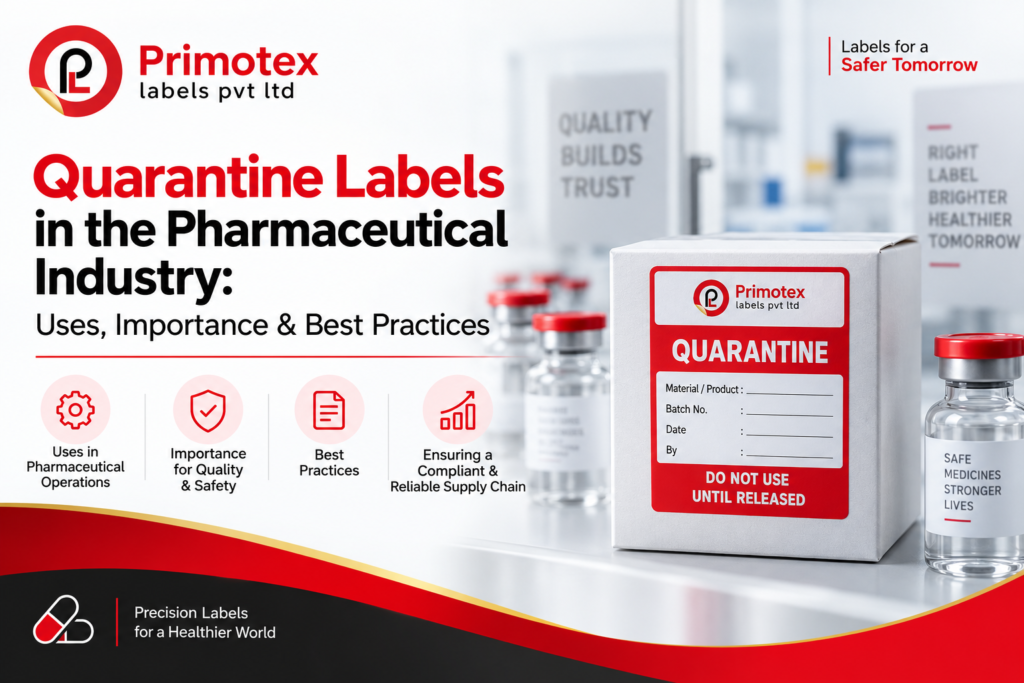
In pharmaceutical manufacturing, every material and product must have a clearly defined status before it can move to the next stage. A batch waiting for inspection cannot be treated like an approved batch, and rejected materials cannot remain mixed with usable stock. This is where quarantine labels become an important part of pharmaceutical operations.
Pharmaceutical quarantine labels provide a visible indication that materials or products are temporarily restricted until the required inspection, testing, or authorization is completed. When implemented correctly, quarantine labeling supports quality control, inventory accuracy, traceability, and regulatory compliance.
For pharmaceutical companies, the label is not simply a sticker. It acts as a practical status identification tool within warehouses, production areas, and quality systems.
What Are Quarantine Labels?
Quarantine labels are used to identify quarantined materials that cannot be used, distributed, or processed until an authorized decision has been made.
These labels can be applied to raw materials, packaging components, work-in-progress items, or finished goods. Depending on the company’s procedures, the label may indicate a specific quarantine status, reason for quarantine, date, batch details, and responsible department.
For example, raw materials quarantine may be required when incoming materials are awaiting sampling and laboratory testing. Similarly, finished goods quarantine can prevent a completed batch from being released before quality approval.
The main purpose is simple: make the status of an item immediately visible and reduce the possibility of accidental use.
Why Are Quarantine Status Labels Important?
1. Preventing Mix-Ups
One of the biggest risks in pharmaceutical operations is using the wrong material or releasing a product before authorization. Clear quarantine status labels help employees distinguish restricted stock from approved materials.
This supports material segregation and product segregation, particularly when multiple manufacturing batches are stored in the same facility.
2. Supporting Quality Control
Pharmaceutical products generally pass through several quality checks before release. Materials may remain pending quality control while samples are tested against established specifications.
A visible label communicates the quality control status without requiring employees to search through records every time.
3. Improving Inventory Control
Quarantine labeling also contributes to better inventory control. Warehouse teams can quickly identify which stock is available, under inspection, or restricted.
This becomes especially useful when large quantities of production materials, incoming materials, and packaging materials are handled every day.
4. Strengthening Traceability
Each restricted batch needs to remain identifiable throughout its lifecycle. Proper labeling supports batch traceability, documentation, and an effective audit trail.
When quarantine information is connected with electronic systems or manufacturing documentation, organizations can establish a stronger record of where materials came from, where they were stored, and what decision was ultimately made.
Common Uses of Quarantine Labeling
Quarantine labeling can be used at several stages of pharmaceutical manufacturing.
Raw Materials
Incoming active ingredients, excipients, chemicals, and other materials may be placed under quarantine until they pass the required quality inspection and quality testing.
The label can help identify the material, supplier, lot, quantity, and current status.
Packaging Materials
Cartons, bottles, closures, foils, and other packaging materials can also require quarantine status before being approved for production.
This prevents unverified components from entering a manufacturing batch.
Finished Goods
After production, finished goods may remain restricted until quality assurance reviews the relevant records and test results. A clear label prevents premature material release or product distribution.
Rejected Materials
Materials that fail specifications require a different handling process. Clear identification of rejected materials helps prevent them from being accidentally returned to usable inventory.
What Information Should a Pharmaceutical Quarantine Label Include?
The exact design depends on the company’s standard operating procedures, product requirements, and regulatory requirements. However, a useful label commonly includes:
- Product name or material name
- Batch number or lot number
- Identification number
- Quantity
- Manufacturing date
- Expiry date, where applicable
- Quarantine date
- Supplier information
- Storage conditions
- Current status
- Barcode or QR code, where required
These details support product identification and material identification while making the status easier to verify.
Barcode labels and QR code labels can also connect physical identification with digital records. This can be particularly valuable when organizations use warehouse software, electronic batch records, or integrated quality control systems.
Quarantine Process: From Receipt to Release
An effective quarantine process should follow a defined sequence rather than relying on informal warehouse practices.
Step 1: Receive and Identify
When incoming materials arrive, the warehouse team records the relevant information and assigns an identification number or batch reference.
Step 2: Apply the Quarantine Label
A properly prepared label is attached to the material or its designated storage container. The status should be clearly visible.
Step 3: Segregate the Material
The material is moved to an appropriate quarantine area or controlled location. Physical separation provides an additional layer of mix-up prevention.
Step 4: Conduct Inspection and Testing
Quality teams perform the required inspection and testing according to approved quality control procedures.
Step 5: Authorize the Decision
Once testing is complete, an authorized person determines whether the material can be released, remains restricted, or enters the rejection process.
Step 6: Update the Status
The physical status label and relevant inventory records should be updated consistently. This creates better status identification throughout the material lifecycle.
GMP Compliance and Regulatory Considerations
Quarantine labeling is closely connected with GMP compliance and Good Manufacturing Practices because pharmaceutical operations require controlled handling, identification, and documentation.
A company’s quality management system should define how materials are received, identified, segregated, inspected, approved, rejected, and released.
SOP compliance is equally important. Employees should know who can apply, replace, remove, or authorize changes to status labels.
Depending on the market and product, organizations may also need to consider FDA labeling requirements, GMP labeling requirements, and other applicable regulatory requirements. The exact requirements vary by product and jurisdiction, so pharmaceutical companies should validate their labeling procedures against the regulations applicable to their operations.
Best Practices for Pharmaceutical Quarantine Labels
Use Clear and Consistent Status Identification
Labels should make the status immediately understandable. Different status labels should have clearly distinguishable wording, layouts, or approved visual conventions.
Maintain Accurate Data
Incorrect batch numbers, dates, quantities, or material names can undermine traceability. Every label should therefore go through a documented label verification process.
Control Label Printing
Controlled label printing reduces the risk of duplicate, incorrect, or unauthorized labels. Where appropriate, automated systems can generate labels directly from validated production or inventory data.
Integrate Barcodes and QR Codes
Barcode labels and QR code labels can reduce manual data entry and improve product traceability. They can also support serialization and warehouse scanning processes.
Protect Labels From the Environment
Labels used in pharmaceutical warehouses may encounter moisture, temperature variations, chemicals, or repeated handling. Suitable adhesive and label materials should therefore be selected according to the storage environment.
Maintain Documentation Control
Every change to a quarantine procedure or label format should be managed through appropriate documentation control. This helps maintain consistency and supports inspections.
Role of Quarantine Labels in Pharmaceutical Packaging
Quarantine identification does not operate separately from pharmaceutical packaging. Packaging components and finished packages can both require status control.
Reliable pharma packaging labels, medicine labels, and drug labels should remain readable throughout storage and handling. For products requiring advanced traceability, serialization and machine-readable codes can further strengthen identification.
Modern pharmaceutical operations increasingly connect physical labels with digital systems, enabling better inventory labeling, warehouse labeling, and supply-chain visibility.
How Primotex Supports Pharmaceutical Labeling
For pharmaceutical companies looking for a labeling partner, Primotex Labels Pvt Ltd positions itself around precision, compliance, durability, and scalable pharmaceutical labeling solutions. Its supplied company information highlights capabilities covering pharmaceutical adhesive labels, barcode solutions, tamper-evident labels, and compliance-oriented manufacturing.
Primotex also describes capabilities involving advanced printing technologies, variable data, barcode and QR-code printing, and materials designed for demanding pharmaceutical environments.
For quarantine applications, the practical value lies in selecting a label solution that can maintain clear identification, withstand the intended storage conditions, and integrate with the company’s existing quality control systems and manufacturing documentation.
Conclusion
Quarantine labels play a small but critical role in pharmaceutical operations. They help distinguish restricted materials from approved stock, support quality assurance, strengthen traceability, and contribute to safer warehouse and manufacturing practices.
An effective quarantine system depends on more than the physical label. It requires controlled procedures, accurate information, appropriate segregation, reliable verification, and authorized release decisions.
As pharmaceutical supply chains become increasingly digital, quarantine labeling can also work alongside barcodes, QR codes, serialization, electronic records, and automated inventory systems. For companies seeking dependable labeling solutions, Primotex can support pharmaceutical labeling requirements with its stated focus on compliance, printing technology, material performance, and scalable production.
Frequently Asked Questions
What is the purpose of a quarantine label in pharmaceuticals?
A quarantine label identifies materials or products that are restricted from use or distribution until the required inspection, testing, or quality authorization is completed.
What information should a quarantine label contain?
A typical label may include the product or material name, batch or lot number, quantity, identification number, quarantine date, manufacturing or expiry date, storage conditions, supplier details, and current status.
Why is quarantine labeling important in pharmaceutical manufacturing?
It helps prevent material mix-ups, supports segregation, improves inventory control, and strengthens traceability throughout manufacturing and warehouse operations.
Are barcodes useful for quarantine labels?
Yes. Barcode and QR-code systems can connect physical labels with digital inventory or quality records, reducing manual data entry and improving identification.
How does quarantine labeling support GMP compliance?
It supports controlled identification, segregation, documentation, and status management—activities that form part of a well-managed pharmaceutical quality system and established GMP procedures.
Can Primotex provide pharmaceutical labeling solutions?
Primotex Labels Pvt Ltd states that it provides pharmaceutical labeling solutions including adhesive, barcode, tamper-evident, and other specialized labels, with a focus on quality and regulatory requirements.